In 2026, freight management is no longer a back-office coordination task— it’s a strategic cost lever. The U.S. business logistics costs already surpassed $2.3 trillion, accounting for 8.7% of GDP. Since freight forms a significant share of this expense, even the smallest inefficiencies can cause major, unrecoverable losses. This is where the freight management software comes into play. From digitizing shipment execution to optimizing rates, it enables you to streamline day-to-day operations frictionlessly. Fragmented spreadsheets or emails will no longer trouble you. Rather, you will gain access to a well-orchestrated, data-driven ecosystem, exclusively designed to reduce cost leakage and improve delivery precision.

Table of Contents
1. Freight management software explained: Architecture, scope, and core capabilities
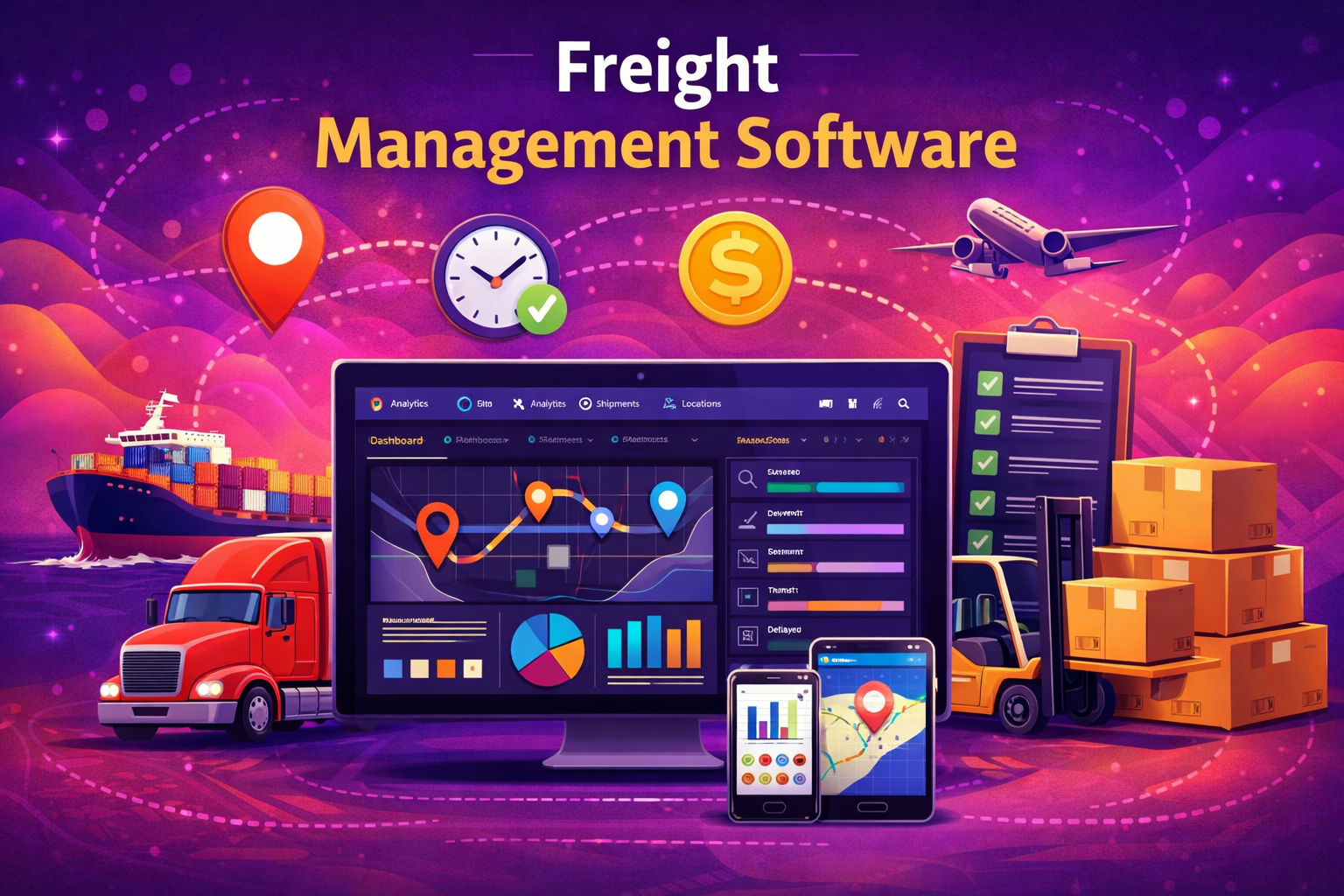
Being an integrated logistics platform, it brings together all operations under one roof. So, your teams can effortlessly plan, execute, track, audit, and optimize freight movements across multimodal transportation networks. Consider it as a digital command center— connecting shippers, carriers, finance teams, and warehouses within one synchronized and unified environment. By embedding analytics into operations and automating freight workflows, the freight management software transforms reactive logistics management into proactive supply chain orchestration.
2. How freight management software orchestrates end-to-end shipment execution?
ERP synchronization and shipment data structuring
The freight forwarding software can be integrated with ERP, WMS, and order management systems seamlessly for automatic shipment data extraction. Thus, you no longer have to engage your critical resources in manual re-entry. The system will automatically validate shipment parameters, including:
- Weights
- Dimensions
- Delivery deadlines
- Compliance requirements
Only after the outcomes are affirmative will it convert orders into executable freight tasks. Apart from this, it comes embedded with intelligent logic that identifies consolidation opportunities by clustering shipments having similar destinations or timelines. By structuring raw order data into optimized shipment plans, it reduces administrative overhead and establishes a standardized operational workflow.
Algorithm-driven carrier evaluation and digital load tendering
Once the shipments are structured, the freight management system initiates carrier selection using data-backed evaluation frameworks. Some of the core operational mechanisms include:
Instant contract rate benchmarking
You can leverage the automatic contract rate matcher module embedded within the software. It will help you compare multiple shipment attributes against pre-negotiated rate cards. The result? You can effortlessly shortlist the most cost-efficient carrier in no time for your logistics operations.
Reliability-first career screening
Finding the best career can put you in a hyper-overwhelmed state. What may seem reliable today might not be trustworthy enough tomorrow once the situation changes. That’s why you can leverage the freight management software to assess your options through performance-based filters. For this, you can easily factor in on-time delivery records, compliance scores, and historical claim ratios so that your decision can hit the bull’s eye.
SLA-aligned transit time intelligence
A modern freight management tool unlocks the goodness of transit-time modeling for your logistics operations. Using this, you can effortlessly evaluate delivery timelines against SLA commitments, and that too with utmost accuracy, like never before. The result? No more worries about service breaches.
Digital documentation and compliance automation
Whether it’s the Bills of Lading or the certificates of regulatory adherence, relying on manual, obsolete methods means your teams will be buried under heaps of documentation. The result? Delayed approvals, mismatched budgets, cost overruns, and vagueness in information flow. Now, the freight management system is brought into the picture, flipping the dynamics completely through documentation automation.
Here’s how!
- All types of files and records can be stored in a centralized repository so that your teams can access them without having to wait for manual reconciliation.
- Thanks to the version control mechanism, stakeholders will have updates in their hands, and that too without any form of discrepancies.
- The software will also help you validate compliance requisites for cross-border shipments. Thus, you can easily avoid being exposed to regulatory penalties or customs approval delays.
Real-time tracking, exception alerts, and proactive intervention
Visibility is indeed one of the most valuable capabilities embedded deep within the freight management system. It contributes directly to your business’s overall improvement by:
- Connecting carrier systems through live GPS tracking integration, thereby offering location-based shipment updates
- Allowing you to track key milestone checkpoints, which may include transit hubs and pickup destinations
- Sending alerts to logistics managers, customers, and warehouse teams for faster response coordination
Freight cost audits, validation, and payment automation
After shipment, the software transitions into financial governance mode. It automatically cross-verifies carrier invoices against contracted rates, fuel surcharges, detention fees, and accessorial charges. Discrepancies get flagged before payments are authorized to prevent overbilling. Once freight audit workflows are digitized, companies can reduce manual reconciliation cycles by significant margins.
3. Conclusion
The freight management software has transcended being a transportation tool into a digital backbone. As expenses continue to rise globally, relying on manual coordination will erode margins and make services unstable. That’s why you need a structured freight managed platform from experienced partners, like Bytelogic Technologies.